How Creative Intelligence actually runs
Our author
Graham Hardy
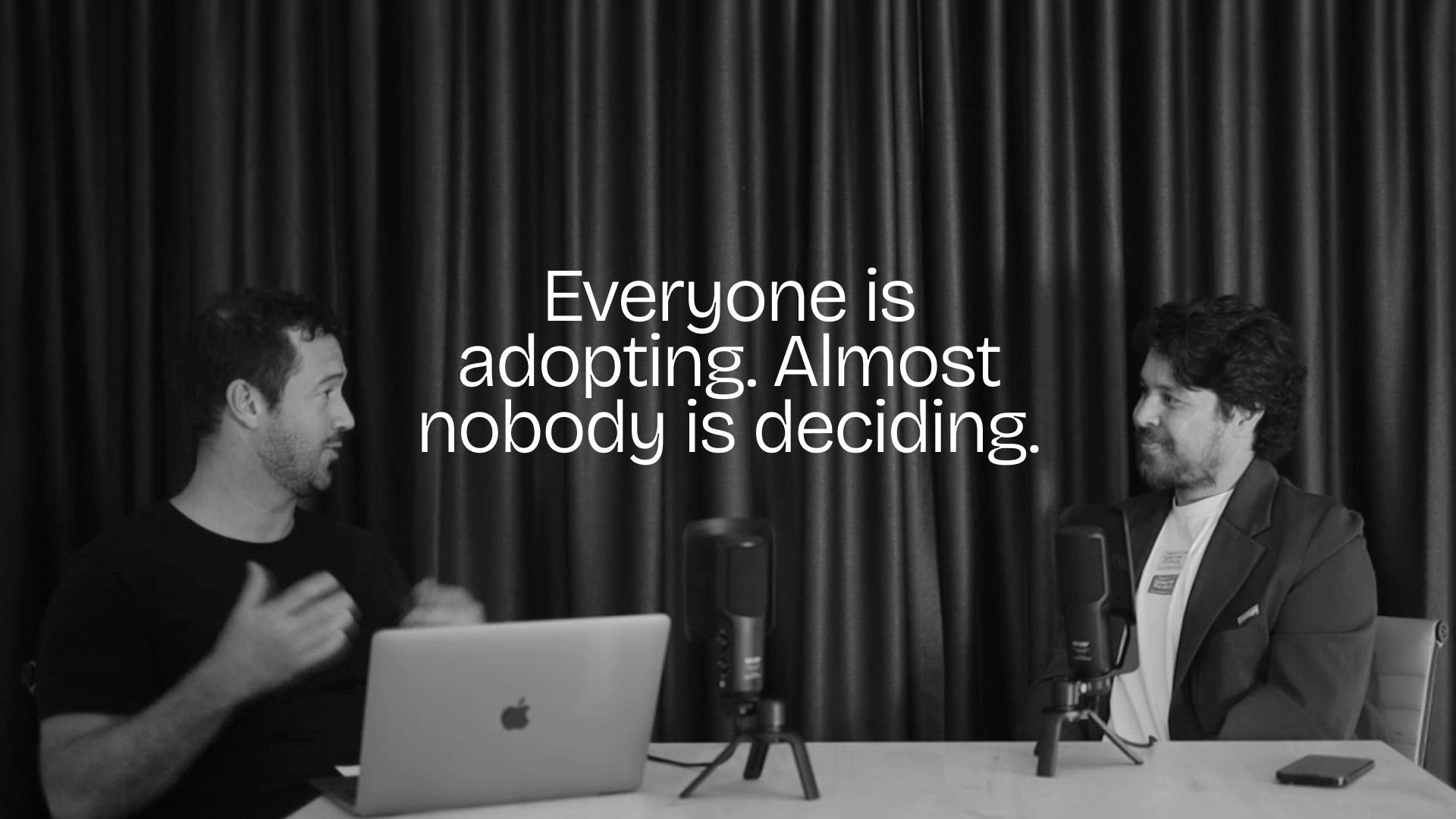
A framework is easy to draw and hard to run. Most agencies publishing an AI position right now have a diagram and no answer to the two questions that actually matter, which are who owns this and what are the rules for stopping. We have spent the past few months working out our answer to both.
The purpose is narrower than you would think
We are not trying to become an AI agency and we are not trying to push AI into everything we do. The test is whether a given tool makes the work better, which in practice means faster without losing quality, or better quality in the same time. If it delivers neither, it does not come into the studio, however good the demo was. That sounds obvious written down, but it rules out a great deal, and having it written down is what lets us say no without relitigating the whole question every time.
Who owns what
Mick Lakin, our creative director, owns process change in the studio. Anything that alters how the work gets made goes through him, which keeps the craft standard in the room where the decision is being made rather than somewhere downstream of it. Alex, our senior developer and the person here who understands this technology most deeply, owns the technical assessment. He can tell what a tool is genuinely doing underneath the interface, and more usefully, where it will break.
The part we care most about is that neither of them is responsible for finding things. Our designers, account directors and developers are the ones running into the problems and noticing what might solve them, so individuals across the team champion the testing and the thinking and bring it to Mick and Alex. A process that only works when leadership has a good idea is not a process, it is a bottleneck with a diagram attached.
The five stages
We identify a real use case from live work. We analyse what it is actually doing, which means deciding whether it assists a person, accelerates a process, or automates something outright, because those three carry very different risks and should never be waved through as one. We stress test it against a difficult brief rather than a convenient one. We refine and standardise whatever survives, so it becomes a documented way of working instead of one person’s clever shortcut. Then we roll it out, and the loop starts again.
Writing down the rules
The work we are doing right now is the least glamorous part and the most important. For each of those five stages we are documenting the rules and the guardrails. What qualifies as a use case worth the studio’s time. What evidence a stress test has to produce before anything moves forward. What never goes near a third party tool. Who signs off before any of it touches client work. What triggers a revisit of something we previously rejected.
When that document is finished we will be able to hand it to a client and talk them through exactly how their work is made, which is the only real test of whether any of this is serious.
You can listen to the full podcast episode:
Spotify: https://open.spotify.com/episode/1AQ75DzoYlwNw3B9a72sF4?si=dgP1Hj9GTkiK08iyWCTFVA
YouTube: https://youtu.be/7vfBtAOEVMo